
Split airport conundrum || Insight
Air Calédonie's near-grounding and financial collapse is an extreme case of trying to solve the unsolvable: a split domestic-international airport system in a thin market.

The plan was first proposed in 2025 - Air Calédonie, the domestic operator in New Caledonia, was to move its hub from Nouméa’s Magenta airport to La Tontouta. The former is in the city centre - it takes just 10 minutes to drive downtown. The latter is a much larger facility but located almost 50 kilometres away from the city centre.
The rationale was simple. Air Calédonie was the only operator at the city airport, which was very convenient for residents, but made connections for international visitors arriving via La Tontouta impossible. It made efficient cooperation of Air Calédonie and its sister airline Aircalin (both are owned by the local government) very difficult.
In the aftermath of the 2024 protests over the staled and botched self-determination process and persistent economic inequality, the French colony was desperate to revive its hard-hit tourism industry. Before the riots, it accounted for some 5% of New Caledonia’s GDP. Tourists arriving by air and going to popular smaller islands, such as Île des Pins or Lifou, could not conveniently fly there with an easy transit at La Tontouta, and the relocation was meant to help it. By better integrating the two airlines owned by the local government, it would also make both more financially resilient.
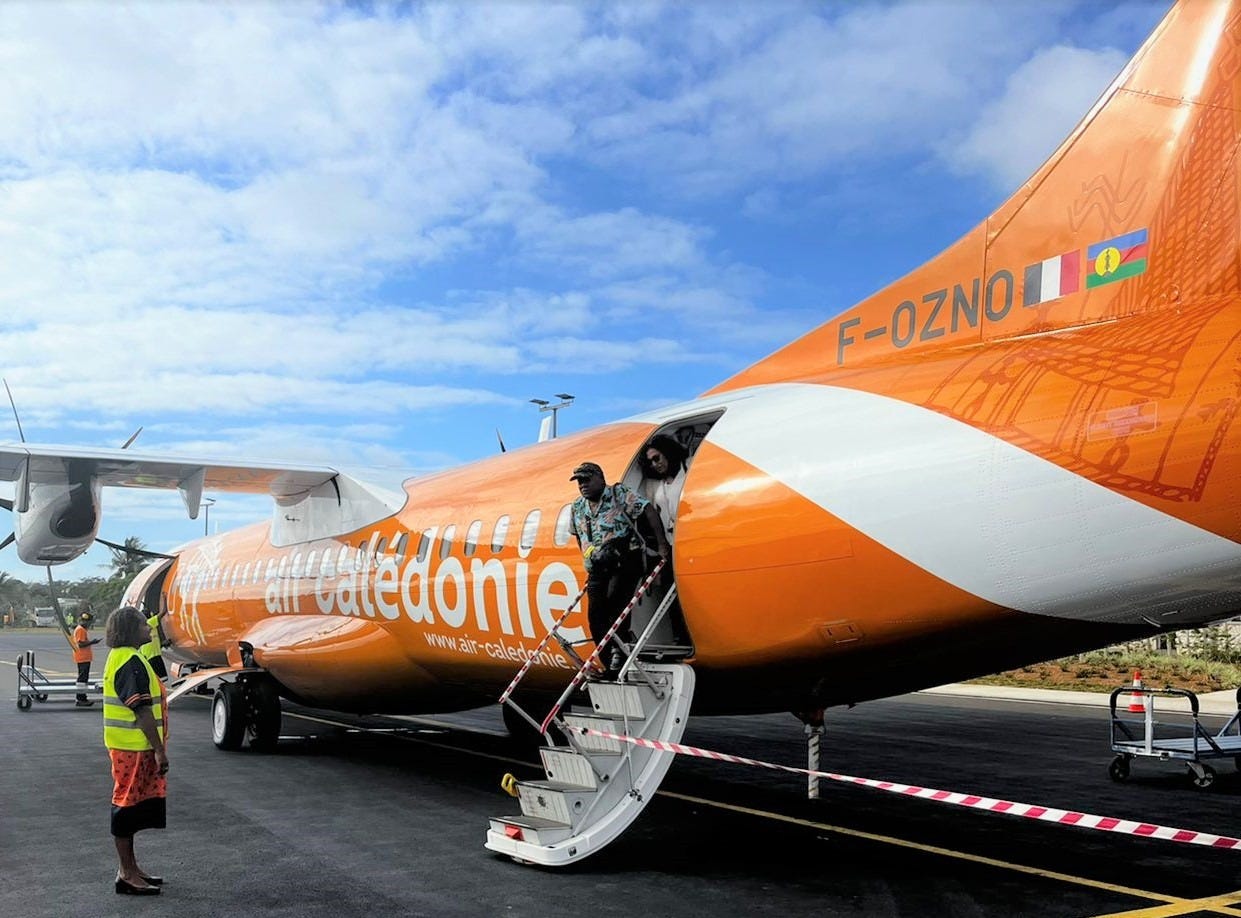
But the plan immediately sparked protests of the residents of outlying islands. It came at a time when tensions are still very high due to the ongoing political strife over the future status of the colony. The plan to force locals to fly to an airport 50 kilometres away from the city was met with fierce resistance.
The move was repetitively delayed. But it eventually happened in early March 2026. Or rather, was due to happen. On the day of the move, residents blocked all outlying islands’ airports. The airline suspended all flights except for its sole international service to Port Vila in Vanuatu (operated as it already was from La Tontouta), and started bleeding cash. It furloughed nearly half of its staff, and entered into bankruptcy restructuring by mid-April. The officials have admitted that the future of Air Calédonie is bleak if it cannot resume regular operations. For now, the airline flies to Port Vila and operates a skeleton domestic network to Île des Pins. Other outlying islands remain with no scheduled air services.
Double airport, double trouble
The New Caledonia air policymakers are between a rock and a hard place because it is notoriously difficult to make such a two-airport system work for both domestic passengers and international connectivity. The complexity increases even further in destinations where air connectivity is essential, such as islands and sparsely populated territories with limited alternatives for travel.
(The below does not apply to cities with demand, economy, and population big enough to sustain multiple airports, such as London, Paris, or New York.)
Local passengers require convenience. Downtown airports provide quick access to hospitals, universities, entertainment venues, and businesses in the city. For passengers who use domestic flights as a commute, this is essential - it only works if they can waste the minimum amount of time on transfers to and from the airport. Such flights are often not very profitable for the domestic airline but serve an essential social, economic, and political role. They pay off in terms of development and opportunities, even if it’s not always the airline reaping these profits. This is particularly acute considerations in territories such as New Caledonia - suffering from considerable inequalities between the outlying islands and the Indigenous Kanak population, and the more settler-populated and economically developed capital region.
International flows are essential. Downtown airports tend to be restricted in terms of infrastructure and capabilities. The only runway at the Magenta airport is just 1,250 metres, which makes jet operations, even regional or narrowbody, impossible. Out-of-city airports tend to be larger and less restricted, which facilitates international (including long-haul) connectivity. Obviously, this is important to the local market.
Combinations are tricky. The exact need for international-to-domestic connectivity will differ between territories. In some places, international traffic remains heavily concentrated on the capital. It is then easier to separate the two flows of traffic. However, in some places - New Caledonia being a good example - there is a steady demand for travel via the capital to outlying islands and vice versa. This means a form of interconnectivity between domestic and international connections is desirable.
If domestic flights operate from the city airport, and international ones from the other one, such interconnectivity is limited. Buses, taxis, or even rail are all very inefficient ways of transiting between two airports.
If all flights move to the international airport (as is the plan in New Caledonia), domestic passengers lose the convenient option to go to their capital. This can improve the finances of the airlines and make their offer more appealing to tourists, but comes at an expense of local population, particularly the residents of the outlying islands. It undermines the equitable and just growth of the territory.
Mixed operations of domestic flights from both airports are possible, but commercially tricky. With a constrained number of aircraft, relocating some flights to the international airport inevitably cuts the schedule at the domestic one. This can be the most fair and sustainable system, but requires careful planning and coordination to ensure that domestic flights from the international airport provide good connecting options for outbound and inbound traffic. However, they shouldn’t dent into the peak-time domestic connectivity demanded for flights into the capital.
Cases
As Air Calédonie remains nearly totally grounded, its current operations are not representative of its overall pre-March strategy. The airline deploys three ATR72-600s turboprops, but currently only serves Île des Pins domestically and Port Vila in Vanuatu internationally. Both routes operate from the international La Tontouta airport (the Port Vila route was always served from there).
The Air Calédonie-Aircalin airline system (technically the airlines are independent of each other, but as both are state-owned, I treat them as a system) used to have a strict split between the domestic and international networks, with no direct connectivity via the same airport.
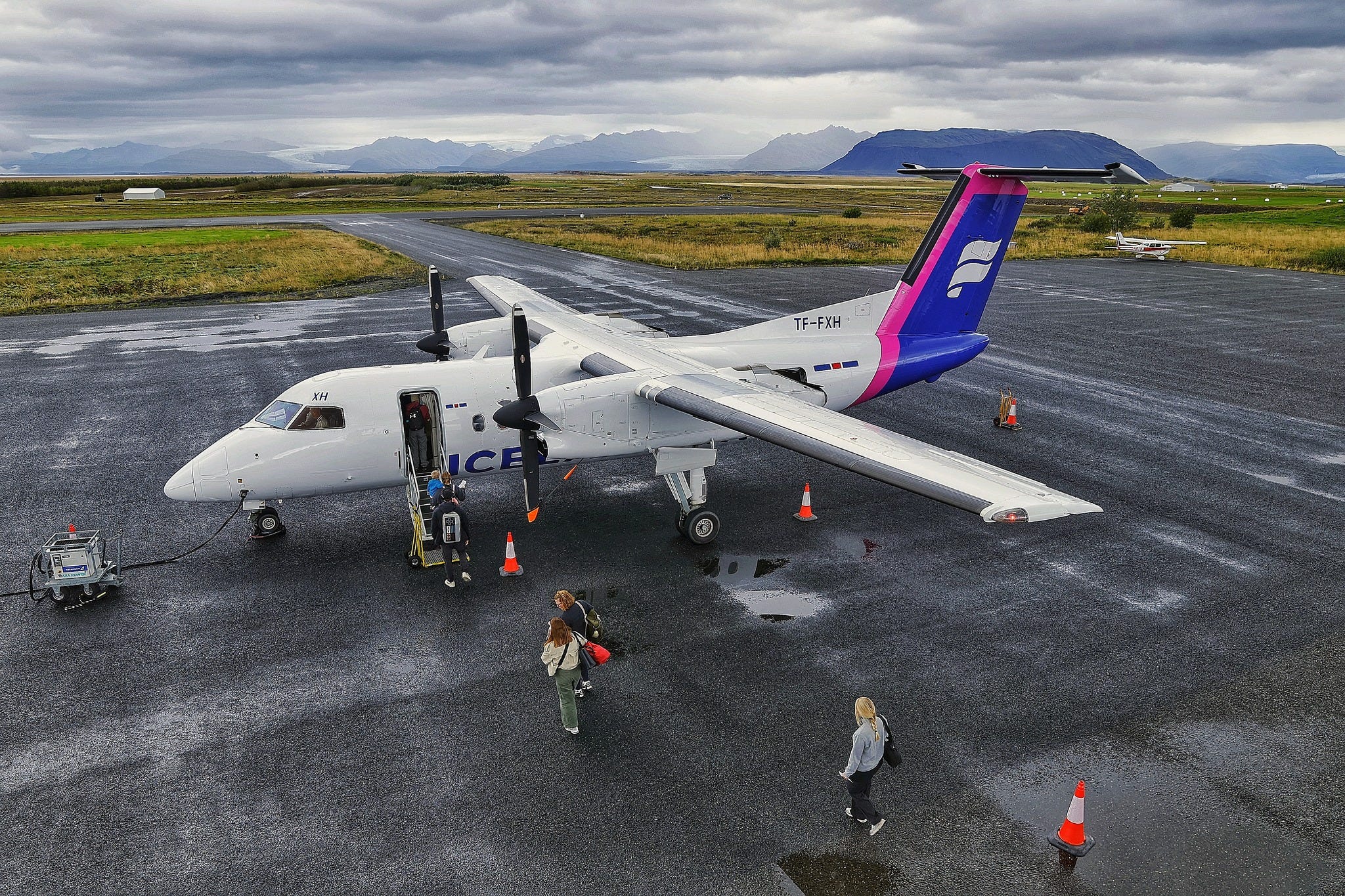
Icelandair manages an analogous network in Reykjavík. The airline operates all of its international flights from Keflavik, the main airport located some 50 kilometres south of the capital of Iceland. All domestic flights (to Akureyri, Egilsstadir, Isafjordur, and Hornafjördur) operate from the downtown Rekjavik airport.
Both systems prioritise (prioritised, in New Caledonia) domestic connectivity over international transfers.
Highly tourism-dependent Namibia and Belize adopted the other strategy.
Namibia is a tricky case as it only has a single, very small domestic carrier - FlyNamibia, a brand of Westair. Nonetheless, the airline serves both the downtown Eros airport in the capital Windhoek, and the international Hosea Kutako International airport. From the former, it connects to Ondangwa and Lüdertiz, cities with strong demand for travel to the capital. From the latter, it flies internationally to Maun in Botswana and Victoria Falls in Zimbabwe, as well as to Mokuti Lodge domestically. All three destinations are geared towards international tourists.
Tropic Air and Maya Island Air in Belize have an even more complex network, combining operations from both the international and municipal airports, balancing the connectivity for tourists arriving from abroad, and domestic demand from the city itself.
The network planning is different in large cities which have an international airport and a smaller one located downtown. Examples include Toronto, Buenos Aires, Seoul, and São Paulo, although, obviously, each case is different in scale and local characteristics. For example, Toronto’s downtown Billy Bishop airport is much more infrastructure-limited than Seoul’s Gimpo. In a larger city, airlines can more easily serve both airports and effectively treat them as two separate markets, although the risk of network cannibalisation always persists.
Very fascinating read. I’ve never given it much thought before. I have some other cities in mind that you can add, but I agree: demand is a huge factor in deciding whether or not a split is needed